Tuning a Guitar – Standard tuning for 6 string guitar
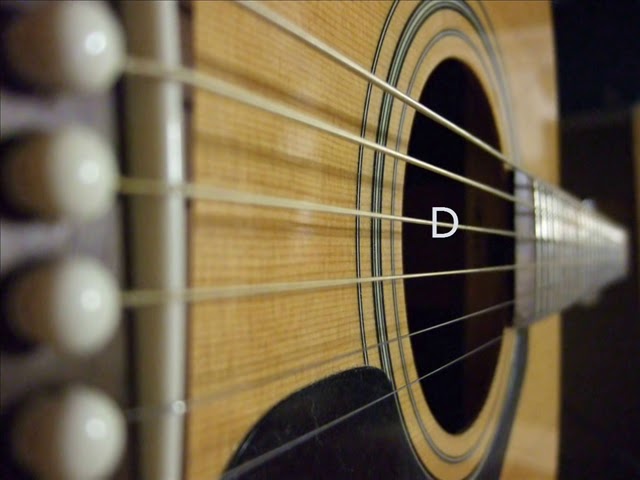
Sick of those videos about tuning a guitar that only play the note 2 or 3 times which doesn’t give you enough time to properly tune each note?
Those types of tuning a guitar videos are really frustrating and you end up having to stop, start and repeat the video in order to hear each note enough times.
Our guitar tuning guide plays each string 8 times over a period of 16 seconds, which should give you plenty of time to correctly tune your guitar.
The tuning follows the standard tuning for 6 string guitar and can be used for either acoustic or electric guitar.
Tuning a guitar is a fundamental skill that every guitarist must master. Proper tuning ensures that the instrument sounds harmonious and pro
A standard six-string guitar is typically tuned to E-A-D-G-B-E from the lowest (thickest) string to the highest (thinnest) string. Here’s a step-by-step guide to tuning a guitar:
Tuning a Guitar Standard Tuning
- Use a Tuner: Start by using an electronic tuner, which can be a clip-on device, a pedal, or an app on your smartphone. Tuners detect the pitch of a string and indicate whether it’s too high (sharp) or too low (flat).
- Tune the Low E String: Pluck the lowest string and adjust the tuning peg until the tuner indicates it is in tune. The low E string should be tuned to 82.41 Hz.
- Tune the A String: Next, pluck the fifth string and adjust the peg until it reads as an A note (110 Hz).
- Tune the D String: Pluck the fourth string and adjust the peg until it reads as a D note (146.83 Hz).
- Tune the G String: Pluck the third string and adjust the peg until it reads as a G note (196 Hz).
- Tune the B String: Pluck the second string and adjust the peg until it reads as a B note (246.94 Hz).
- Tune the High E String: Finally, pluck the first string and adjust the peg until it reads as an E note (329.63 Hz).
After tuning each string, it’s good practice to strum some chords to ensure they sound correct. Guitars can go slightly out of tune while adjusting other strings, so recheck each string once more.
Tuning a Guitar Drop D Tuning
Drop D tuning is a popular alternate tuning, especially in rock and metal genres. It gives a deeper, heavier sound. Here’s how to tune to Drop D:
- Tune the Low E String to D: Lower the pitch of the low E string by a whole step to D. This can be done by plucking the string and turning the tuning peg until the tuner shows D (73.42 Hz).
- Tune the Remaining Strings: The rest of the strings (A, D, G, B, and high E) remain in standard tuning.
Drop D tuning allows for easy power chords and a fuller sound for lower notes, which can add depth to your playing.
Tuning a Guitar DADGAD Tuning
DADGAD tuning is favored in Celtic music and fingerstyle guitar for its open, resonant sound. To tune to DADGAD:
- Tune the Low E String to D: Lower the low E string down to D (73.42 Hz).
- Tune the A String to A: The A string remains the same.
- Tune the D String to D: The D string remains the same.
- Tune the G String to G: The G string remains the same.
- Tune the B String to A: Lower the B string by a whole step to A (110 Hz).
- Tune the High E String to D: Lower the high E string down to D (146.83 Hz).
This tuning creates a Dsus4 chord when strummed open, providing a rich and droning sound perfect for modal music and fingerpicking styles.
Tuning the Third String to F# (Used in Early Baroque and Renaissance Music)
Another interesting alternate tuning involves raising the third string from G to F#. This tuning is useful for certain chord voicings and fingerstyle arrangements. To achieve this tuning:
- Tune the Low E String to E: The low E string remains the same.
- Tune the A String to A: The A string remains the same.
- Tune the D String to D: The D string remains the same.
- Tune the G String to F#: Raise the G string by a half step to F# (185 Hz).
- Tune the B String to B: The B string remains the same.
- Tune the High E String to E: The high E string remains the same.
This tuning can provide unique harmonic possibilities and is especially useful in jazz and certain folk styles.
Conclusion
Tuning your guitar correctly is crucial for achieving the best sound. While standard tuning is the most common and versatile, exploring alternate tunings like Drop D, DADGAD, and tuning the third string to F# can open new creative avenues and inspire fresh musical ideas. Whether you’re strumming chords, playing fingerstyle, or rocking out, the right tuning can make all the difference.
if you liked this guitar tuning aid, then make sure you check out our free online guitar tuner for 6 string guitar and bass guitars.