

A parents journey through their childrens education.
As a parent, we are all in a constant quest to provide our children with opportunities that pave the way for a successful and happy life. Beyond the reading, writing, and ‘rithmatic, there’s another area of development often overlooked: music education. I strongly believe that music lessons are more than a hobby or extra-curricular activity; they are an investment in a child’s cognitive, emotional, and social well-being. Here are some reasons you should consider enrolling your child in music lessons.
Cognitive Development
Countless studies have shown the immense cognitive benefits of learning an instrument. Musical training involves multiple cognitive processes, including reading musical notation, understanding scales and chords, and translating them into hand-eye coordination. One of the significant challenges children face today is the abundance of distractions, from social media to video games. Music lessons require consistent practice and dedication. Learning an instrument teaches discipline and time management, as regular practice sessions need to be fitted into a busy schedule.

The ability to stick to a practice routine instills a sense of responsibility and discipline that is applicable in other areas of life, such as schoolwork and chores
Emotional Intelligence
Music is deeply connected to human emotion. As your child learns to play an instrument, they not only master the technique but also begin to understand the emotional language of music. This heightened sense of emotional intelligence is beneficial in every walk of life, enabling a more profound understanding of themselves and the world around them. Music lessons teach children how to express their feelings and interpret the emotions conveyed in a piece of music—skills that are invaluable in personal and professional relationships.
Discipline and Time Management
One of the significant challenges children face today is the abundance of distractions, from social media to video games. Music lessons require consistent practice and dedication. Learning an instrument teaches discipline and time management, as regular practice sessions need to be fitted into a busy schedule. The ability to stick to a practice routine instills a sense of responsibility and discipline that is applicable in other areas of life, such as schoolwork and chores.
Social Skills
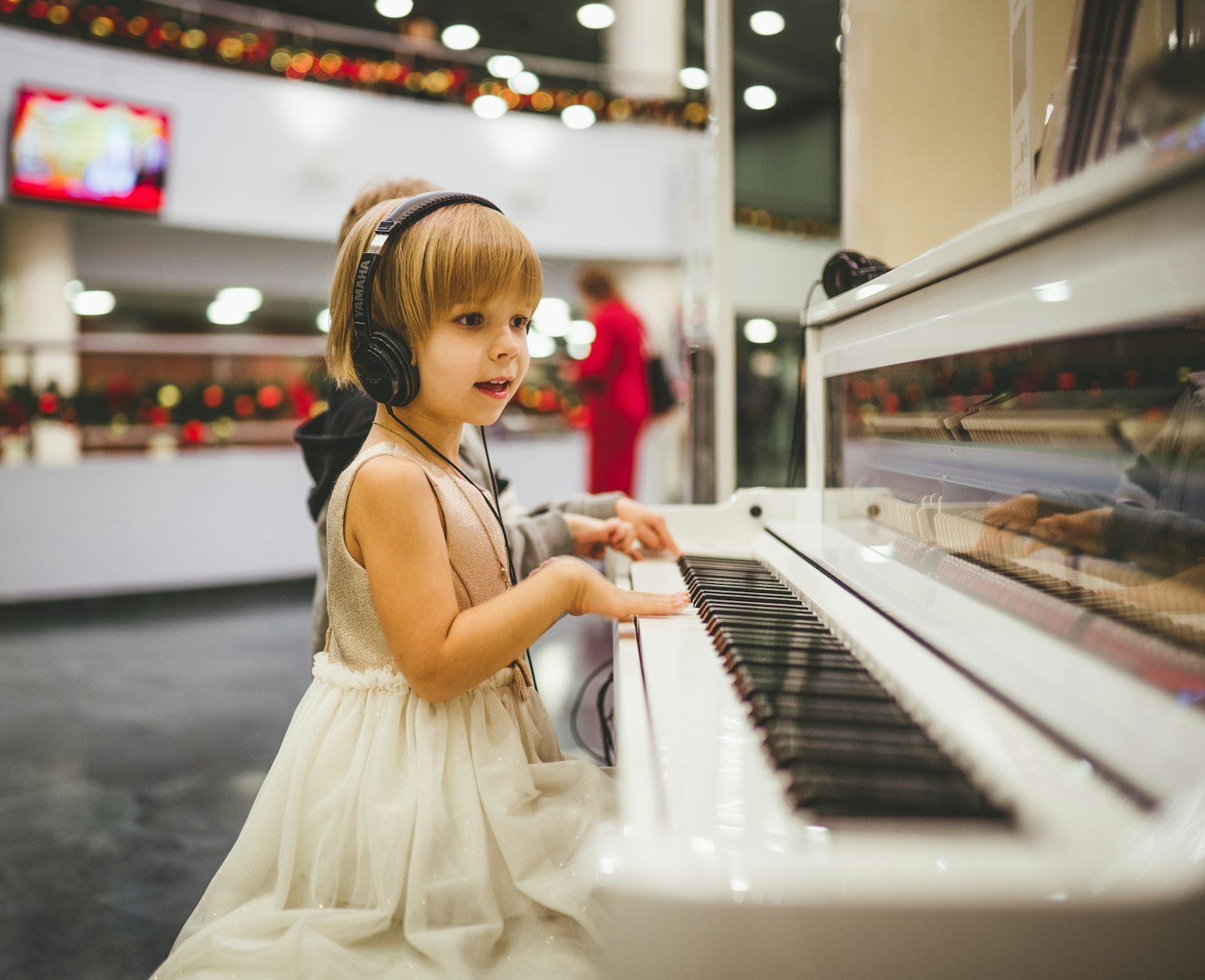
For those who think that music is a solitary endeavor, think again. While initial lessons might focus on individual skills, most musical endeavors are highly social. Whether it’s participating in a school band, performing in a duo, or just jamming with friends, music teaches teamwork, cooperation, and effective communication. It allows children to understand that each player’s part is crucial to the overall success of the group, helping them learn to listen, give, and take constructive criticism, and collaborate effectively.
Lifelong Appreciation of Arts and Culture
Exposing children to music lessons early on cultivates a deep-rooted appreciation for the arts. It enables them to explore various cultures and historical periods through different types of music. In a world increasingly dominated by screens and virtual experiences, the tactile, live experience of making music offers a soul-enriching alternative.
Mental Health Benefits
In today’s high-stress environment, mental well-being is of utmost importance, even for our little ones. Playing an instrument has therapeutic effects; it’s a form of creative expression that provides an emotional outlet and helps in reducing stress and anxiety. The focus required in playing also serves as a form of mindfulness, allowing children to escape daily pressures and immerse themselves in the art.
As a parent who has walked this path, I can say that the benefits far outweigh the investment in terms of time and money. Music lessons don’t have to be a chore or an imposition. With the right teacher and a supportive environment, they can be a fun and enriching experience your child looks forward to every week.
Ultimately, the skills and values acquired through musical training are lifelong assets, enriching not only the child’s life but also contributing positively to society at large.
So, if you’re on the fence about music lessons, consider taking the plunge. Your child’s future self will thank you for it.


